The Book Collecting Guide
A practical reference for understanding book condition, anatomy, and value.
Need a term defined? Browse the Glossary →
Last updated: April 29, 2026 • Authors: Page & Provenance team
Educational reference only — not a valuation tool
Grading Scale (industry-standard terms)
This guide focuses primarily on hardcover rare-book collecting and dust jacket evaluation. Paperback and softcover books follow related but distinct conventions, so they should be described with their own edition cues and condition expectations. Condition grading is holistic: age, scarcity, genre, and collector expectations all affect how a defect is weighed.
Scope note:
This page is a reference for collecting language, not a price calculator. Use it to understand description standards, then evaluate market value separately.
Book and jacket are graded separately
In professional descriptions, the book and dust jacket are assessed independently. A copy may be a Fine book in a Very Good jacket, or a Near Fine book in a Good jacket. That separation is standard trade practice.
- The book grade covers boards, spine, text block, hinges, endpapers, markings, and overall structural condition.
- The dust jacket grade covers chips, tears, losses, sunning, price clipping, restoration, and completeness.
- When evaluating a collectible copy, treat the book and jacket as two related but distinct objects.
Page & Provenance's primary scale vs. broader trade vocabulary
Page & Provenance's own primary condition scale has five grades: Poor → Fair → Good → Very Good → Fine. The sections below marked (P&P Scale) correspond to that ladder.
You'll also see broader book-trade vocabulary in this guide and elsewhere in the trade — terms like As New, Near Fine, Good+, and Reading Copy. These are legitimate, widely-used collecting terms worth knowing, marked (Trade Term) below, but they are not additional Page & Provenance primary grades.
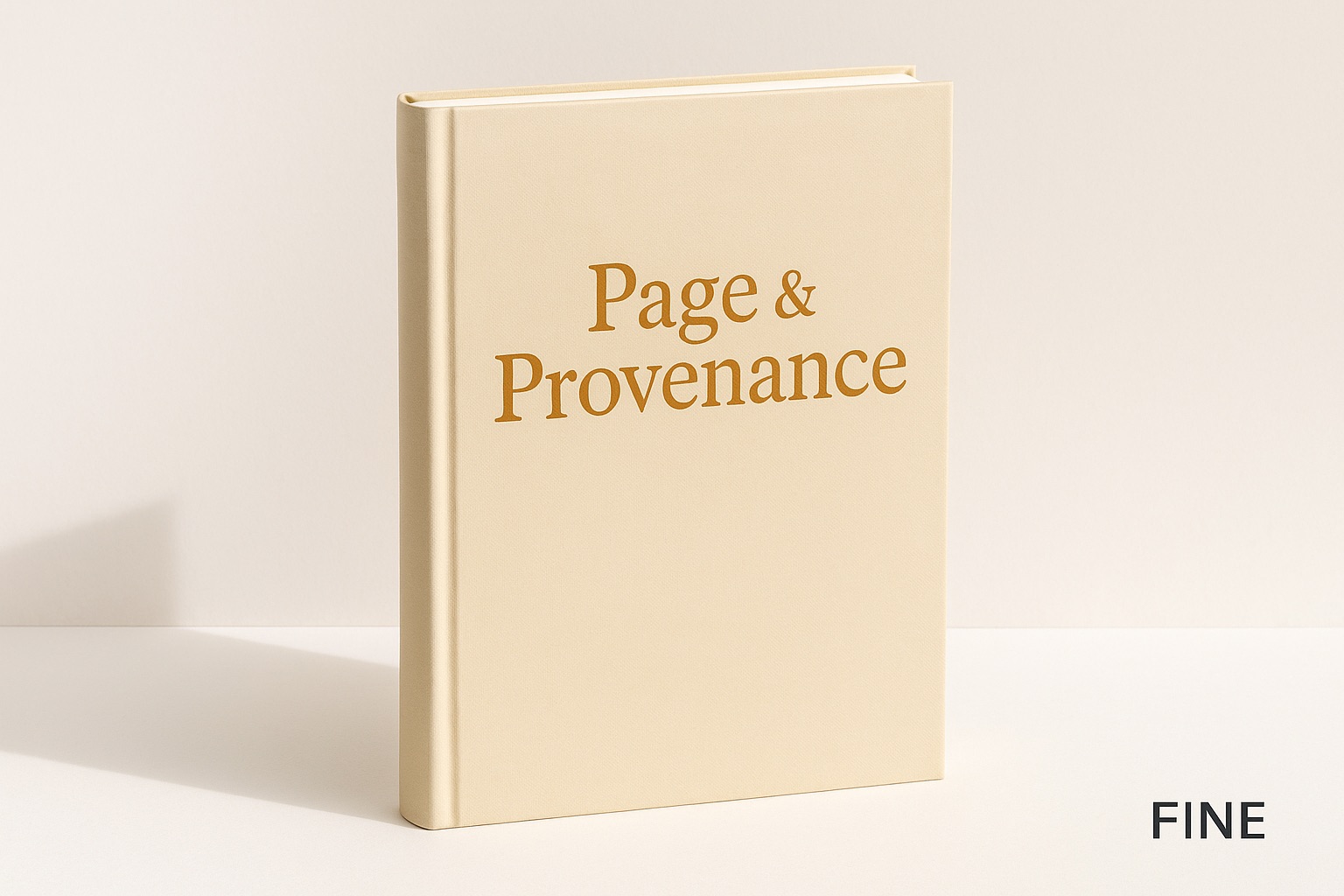
Top-tier condition, used sparingly in trade description.
A "Fine" or "As New" book is at the top of the collecting scale, but the two terms are not always interchangeable. "As New" or "Mint" is usually reserved for modern books that appear factory-fresh and retain original crispness. "Fine" is the highest common condition tier, but it is often used more broadly for older books that are exceptionally clean and free of significant defects.
Typical Characteristics (book):
- • Binding tight and square — book stands perfectly upright with no lean or cocking.
- • Pages pristine — bright white (or original color), no foxing, toning, or discoloration.
- • Corners sharp — no bumping, rounding, or wear to board corners.
- • Spine intact — no rolling, creasing, or fading. All gilt or lettering perfect.
- • No markings — no inscriptions, bookplates, remainder marks, or price stickers.
- • Interior clean — hinges tight, endpapers spotless, no offsetting or staining.
- • Unread appearance — book opens stiffly, as if never handled.
Dust jacket (graded separately): a Fine jacket has no chips, tears, creases, or rubbing, with vibrant, unfaded color. A Fine book can sit in a lower-grade jacket, and the two grades are stated separately.
Collector's Note:
Top-tier copies are rare for books more than a few decades old. Even careful handling over time introduces minor wear. When grading, be conservative and consistent—overcalling condition damages your credibility. A true Fine copy should look exceptionally fresh for its age, while an As New copy should read as materially closer to a new book.
When to Use "As New" vs "Fine":
"As New" is typically reserved for modern books (past 20-30 years) that look factory-fresh. "Fine" can apply to older books that are exceptionally clean for their age. Both indicate top-tier condition, but "As New" is used more sparingly and should not be applied casually.
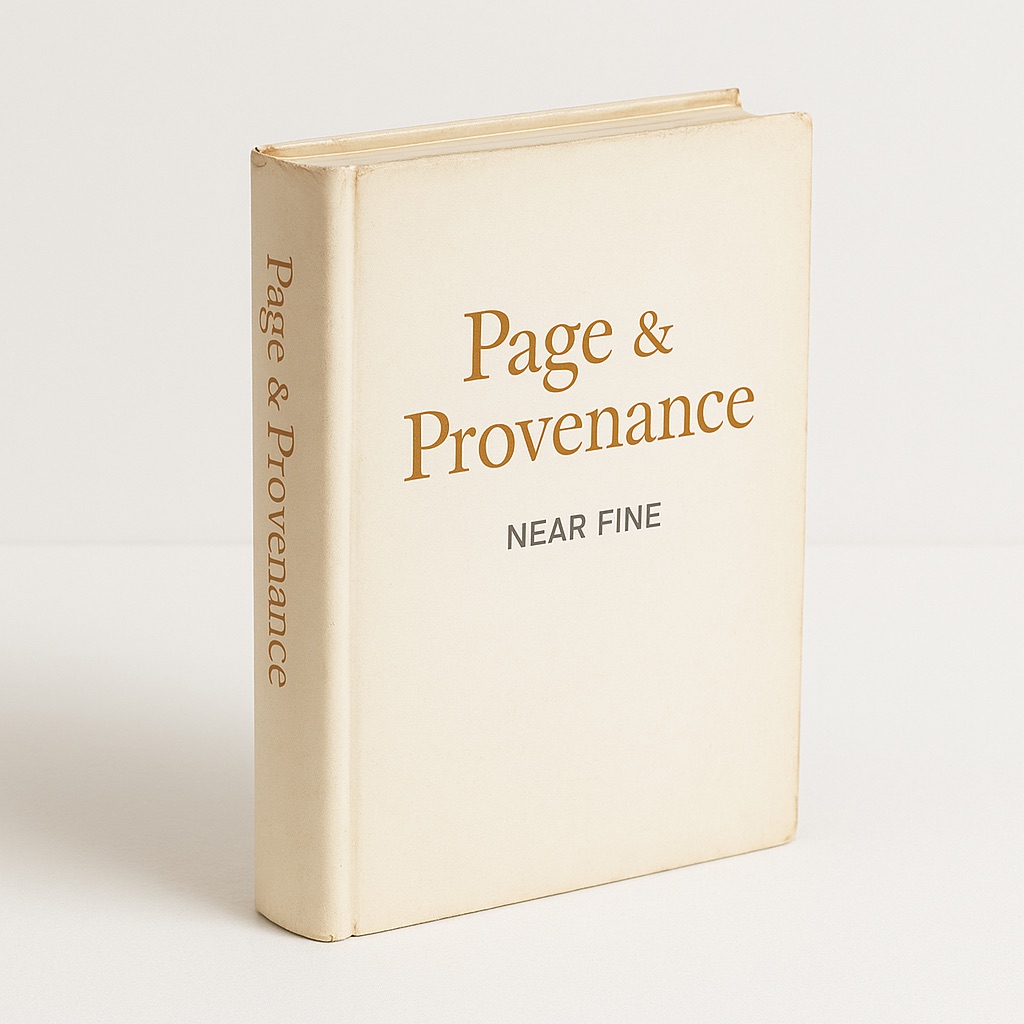
Approaching perfection with only minor, forgivable flaws.
A "Near Fine" book shows minimal signs of careful handling but remains in exceptional condition. This is the most common grade for well-preserved older books and represents copies that have been read once or shelved with care. Near Fine books are highly collectible and often represent the best available condition for titles from past decades.
Typical Characteristics (book):
- • Binding tight — book stands square with perhaps the slightest hint of lean or spine roll from reading.
- • Pages clean — may show very light toning at edges or minimal age-appropriate discoloration.
- • Corners mostly sharp — might have the faintest bumping, but no rounding or significant wear.
- • Spine excellent — lettering intact, perhaps slight fading or one small crease at spine ends.
- • Minimal marks — might have a small, neat previous owner inscription on endpaper (often noted in description).
- • Interior sound — hinges firm, possibly one or two minuscule spots on endpapers.
- • Read once appearance — shows it's been handled but not heavily used.
Dust jacket (graded separately): a Near Fine jacket may have one or two tiny edge rubs, slight fading to the spine, or minor shelf wear.
The Sweet Spot for Collectors:
Near Fine is often the most desirable grade for books over 30-40 years old. It represents a book that has survived with minimal wear while remaining affordable compared to Fine copies. For many titles, Near Fine may be the best condition regularly available on the market.
Common Near Fine Issues:
- Jacket: tiny (1/8" or less) closed tear at edge
- Light rubbing at board corners
- Jacket: light rubbing at spine ends
- Slight age-toning to page edges
- Small gift inscription dated near publication
- Minor foxing on endpapers only
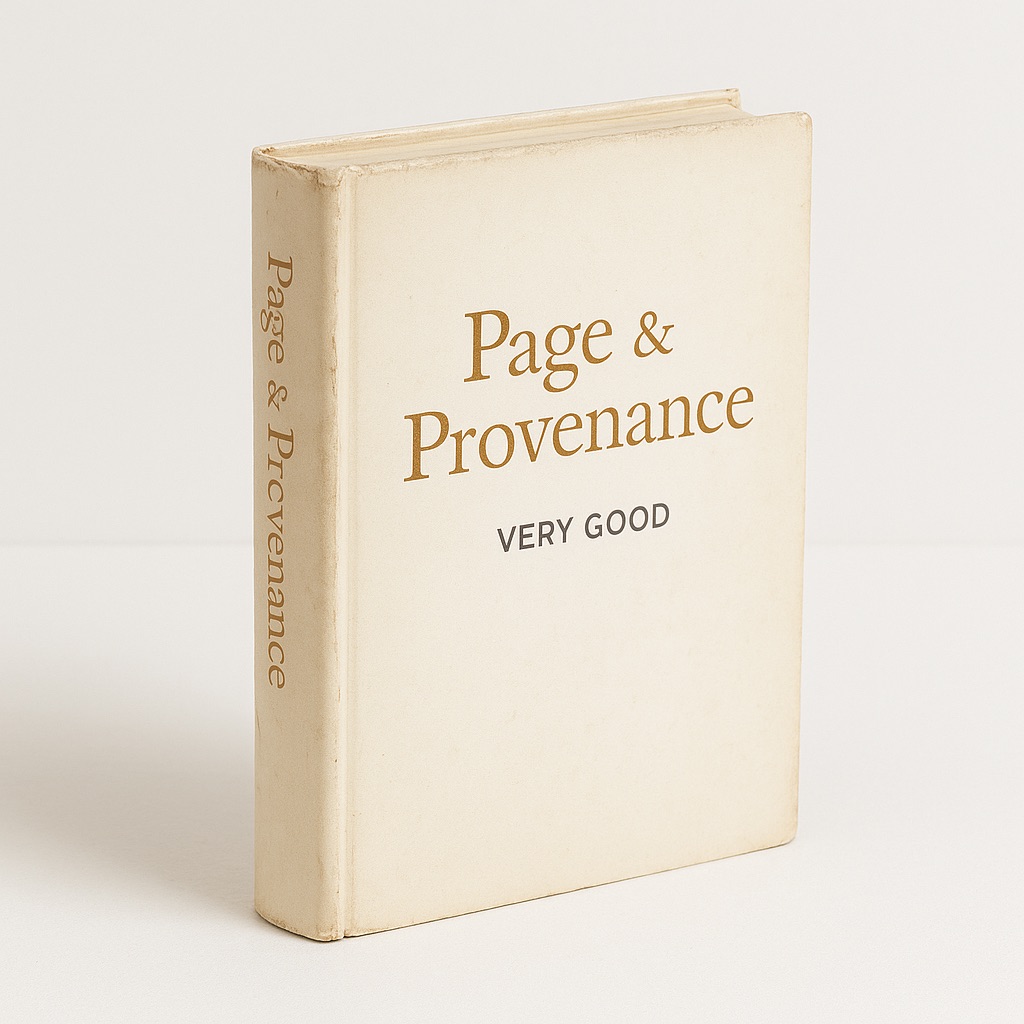
Used and loved, but complete and presentable.
A "Very Good" book shows clear evidence of use but remains structurally sound and complete. This grade represents a well-read book that has been treated with reasonable care. Very Good copies are excellent for readers and collectors seeking content over perfection, often at more accessible prices.
Typical Characteristics (book):
- • Binding sound but used — book may lean slightly, spine may show creases or minor rolling.
- • Pages show wear — light soiling, toning, or minor foxing. Edges may be slightly dirty or darkened.
- • Corners bumped — board corners show rounding or light wear but not exposed board.
- • Spine intact — lettering readable, may have minor fading, small tears at ends, or light creasing.
- • Minor marks acceptable — previous owner name, small bookplate, or light pencil marks possible.
- • Interior functional — hinges may be starting to crack, small spots or stains present but not distracting.
- • Shelf appeal decent — book looks read but not damaged, displays reasonably well.
Dust jacket (graded separately): a Very Good jacket may show small chips, short tears, creasing, or moderate rubbing at edges and spine ends.
The Reader's Choice:
Very Good is an excellent grade for building a library to read and enjoy. These copies are typically noticeably less expensive than Near Fine or better copies of the same title, though how much less varies substantially by title, edition, scarcity, and demand.
Common Very Good Issues:
- Jacket: 1/4" to 1/2" chips or several small tears
- Noticeable spine lean or slight rolling from reading
- Light foxing scattered on pages or concentrated on endpapers
- Edges rubbed or corners bumped on boards
- Jacket: minor fading to spine
- Small spots, light soil, or age-toning throughout
Heavily used but complete and functional.
A "Good" book has significant wear and defects but remains complete and readable. This grade indicates a book that has been well-used, possibly as a library copy or frequently-read favorite. Good copies are ideal for readers seeking affordability or for rare titles where better copies are hard to find.
Typical Characteristics (book):
- • Binding weak but intact — pronounced lean, spine may be cracked or split but holding. Boards still attached.
- • Pages worn — moderate to heavy soiling, foxing, or toning. Corners may be dog-eared or creased.
- • Corners and edges damaged — bumping exposing board or cloth, fraying, or loss to board edges.
- • Spine distressed — fading, heavy creasing, tears, or lettering worn away. Possible amateur repairs.
- • Markings present — writing in margins, underlining, stamps, large bookplates, or library markings.
- • Interior compromised — hinges cracked or broken, previous repairs visible, staining or offsetting common.
- • Shelf appeal poor — book looks worn and tired but remains usable for reading.
Dust jacket (graded separately): a Good jacket may have large chips, tears, pieces missing, or tape repairs. If there is no jacket, state that in the description; it does not lower the book's own grade.
When Good is Good Enough:
Good copies are perfect for research, reading, or budget collecting. They're often the most affordable way to access rare or out-of-print titles. While not suitable for high-grade collections, a Good copy of an impossible-to-find book is better than no copy at all.
Common Good Issues:
- Jacket: large losses or tape repairs (a missing jacket is noted separately)
- Heavy spine lean, visible cracking, or split hinges
- Extensive foxing, staining, or discoloration
- Corners bumped to exposed board or cloth
- Writing, underlining, or highlighting present
- Library stamps, pockets, or withdrawal marks
- Tape repairs to pages or hinges

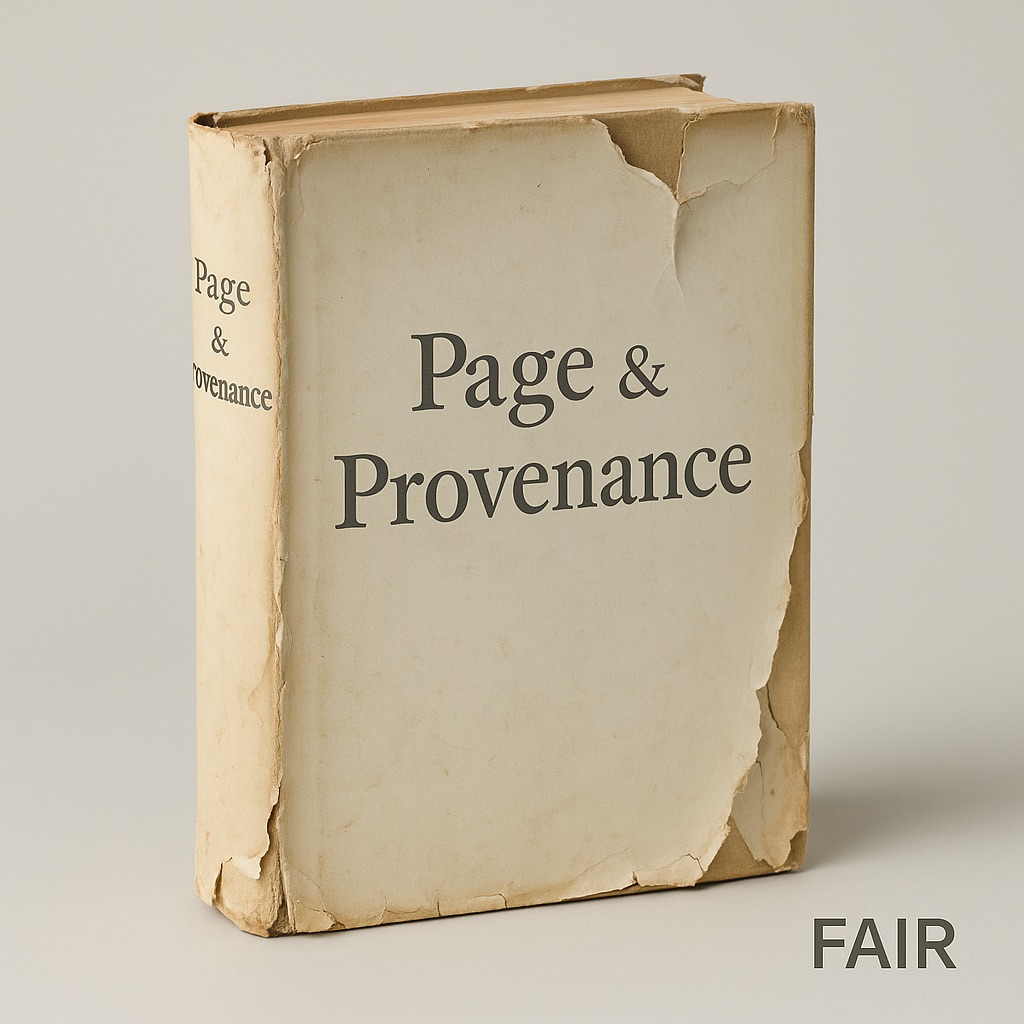
Readable but heavily worn.
A "Fair" book has significant wear and damage but remains complete and functional for reading. While not ideal for serious collectors, Fair copies can still have value for rare or historically important titles where better copies are unavailable or prohibitively expensive.
Typical Characteristics (book):
- • Complete text block — all pages present, though they may be loose or detached.
- • Covers and spine intact but with major wear, tears, staining, or fraying.
- • Heavy soiling or staining — pages may be significantly toned, foxed, or dirty.
- • Structural issues — hinges cracked or broken, spine lean, loose binding.
- • May have repairs, tape, or restoration attempts — often amateur or makeshift.
- • Previous owner marks — inscriptions, bookplates, library markings, or annotations may be present.
- • Binding is weak but holding together, or could be stabilized with professional repair.
Dust jacket (graded separately): a Fair jacket is heavily worn, torn, or missing large pieces, but still recognizable. If there is no jacket, state that in the description; it does not lower the book's own grade.
When Fair Copies Matter:
For extremely rare books, incunabula, or important historical documents, a Fair copy may be the only accessible option. Serious collectors sometimes purchase Fair copies as "reading copies" while waiting to upgrade to a better example.
Barely holding together, sometimes incomplete.
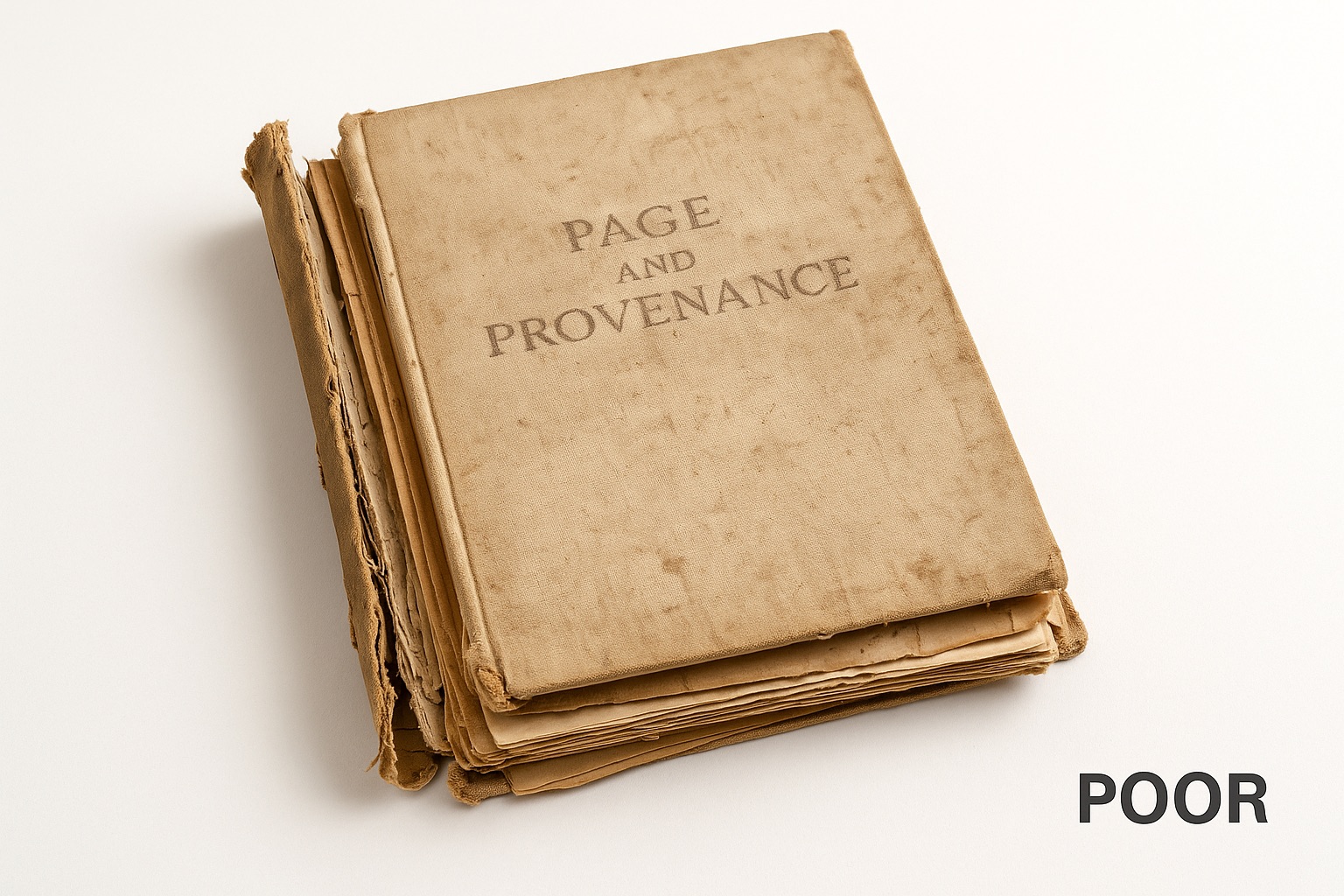
A "Poor" book is in the lowest collectible condition grade—often damaged, incomplete, or barely functional. These copies are typically only valuable for extremely rare items, research purposes, or as "better than nothing" placeholders until a superior copy can be found.
Typical Characteristics (book):
- • Incomplete — pages or covers missing, detached, or severely damaged.
- • Text readability compromised — stains, tears, burns, water damage, or missing portions affect reading.
- • Binding nonexistent or completely broken — book may be held together with rubber bands, string, or nothing at all.
- • Severe environmental damage — mold, mildew, insect damage, or extreme exposure to elements.
- • Heavy annotations or defacement — pages filled with writing, drawings, or highlighting.
- • Structural collapse — spine broken, boards detached, text block separated from case.
- • Amateur repairs failed — tape has yellowed and become brittle, glue has dried and cracked.
Dust jacket (graded separately): a Poor jacket survives only in fragments. If there is no jacket, state that in the description; it does not lower the book's own grade.
Important Note:
Poor copies are rarely collectible and typically have minimal market value. They're kept for reading, parts (dust jackets for restoration), scholarly research, or as temporary placeholders. Professional restoration of Poor copies is usually not cost-effective unless the book is extremely rare or significant.
When Poor Copies Have Value:
- 15th-17th century books (incunabula, early printings)
- Extremely rare first editions with no better copies available
- Historical documents or manuscripts
- Books with unique provenance (signed by author/famous owner despite poor condition)
Book Anatomy
Understanding the physical components of a book is essential for accurate evaluation. Each accordion below contains detailed photos and descriptions of key book parts.
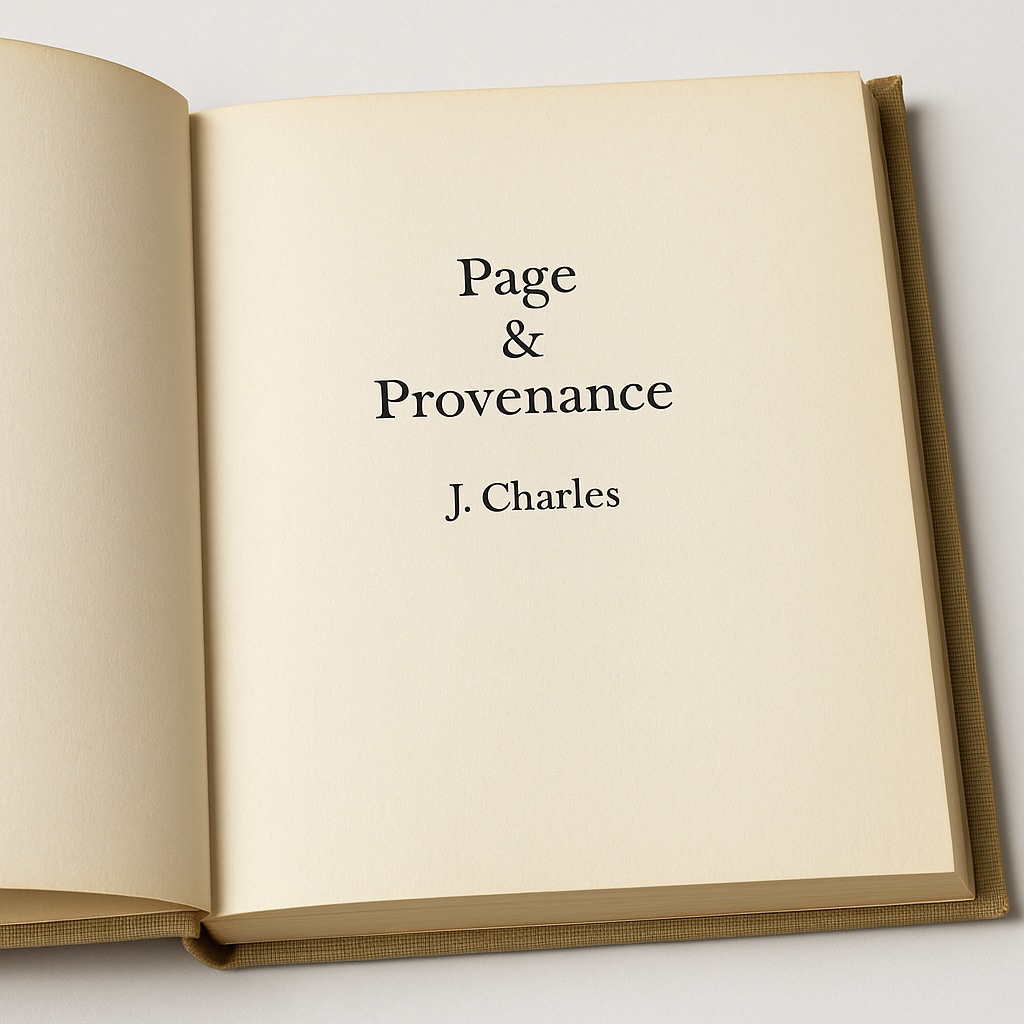
The title page displays the book's full title, subtitle (if any), author(s), and publisher information. This is typically the first page with printed text in a book, appearing on the right-hand (recto) side when you open the front cover.
What to Check:
- Verify the complete title matches bibliographic records
- Confirm author name spelling and format
- Check for illustrator or translator credits
- Note the publisher name and location
- Look for edition statements (e.g., "Revised Edition")
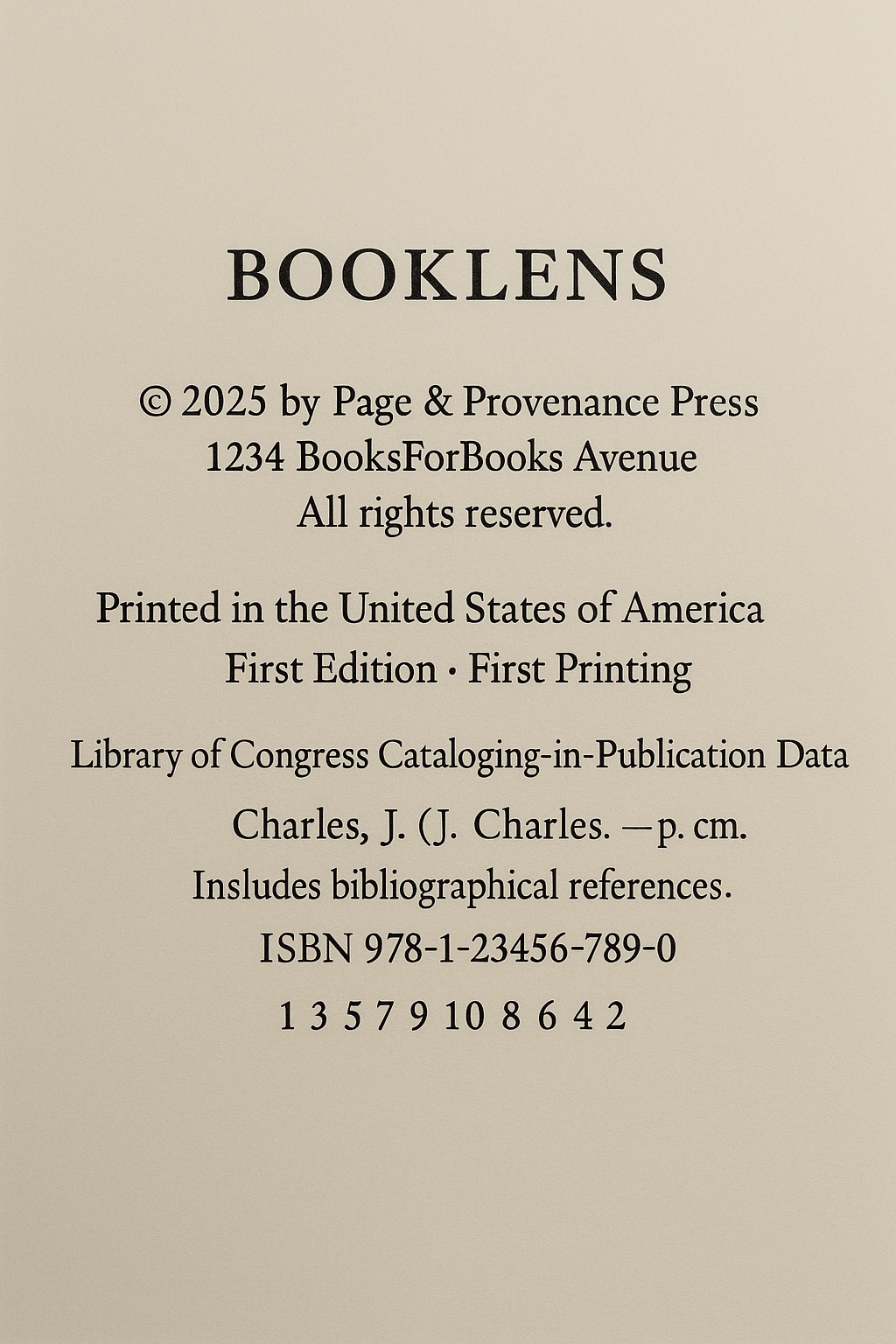
The copyright page (also called the verso) appears on the back of the title page. It contains critical identification data including the copyright date, printing information, ISBN, publisher's address, and edition statements. This is often the most important page for determining a book's true edition and printing.
What to Check:
- Check the number line (e.g., "1 3 5 7 9 10 8 6 4 2" indicates first printing)
- Look for explicit statements like "First Edition" or "First Printing"
- Match copyright year to title page year for potential first edition
- Note any edition statements, revision numbers, or reprint indicators
- Verify ISBN and publisher information
- Check for printing history (later printings often list multiple copyright years)
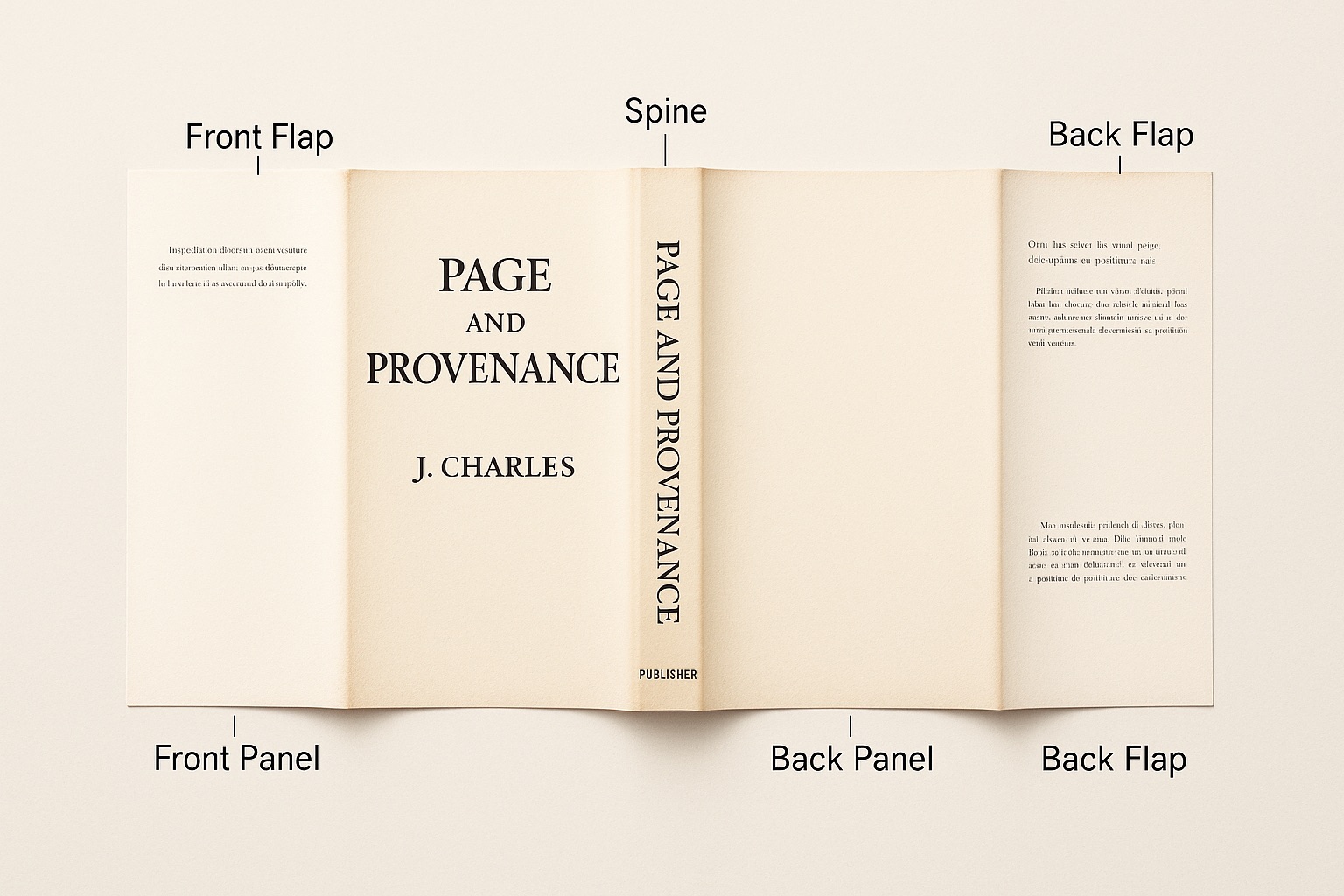
The removable paper cover wrapped around the book's binding. For most modern collectible books, the presence and condition of the original dust jacket is a major driver of value — often the single largest factor after the book's own condition — though exactly how much it matters varies substantially by title, edition, scarcity, and demand.
Anatomy of a Dust Jacket
A dust jacket is a single printed sheet folded around a hardcover book. It has six main parts:
| Section | Location | Typical Contents |
|---|---|---|
| Front Panel | The main front-facing section of the jacket — the part you see first on display. | Book title, author name, main cover art or illustration. |
| Spine Panel | The narrow vertical section that wraps around the book's spine. | Title, author, publisher's logo — designed to be visible on a shelf. |
| Back Panel | The large section opposite the front panel, on the reverse side of the book. | Often contains reviews, summary blurbs, or a photo of the author. |
| Front Flap | The inner flap that folds inside the front cover. | Usually shows the retail price, description, or publisher summary. |
| Back Flap | The inner flap that folds inside the back cover. | Often lists other books by the author, or publisher ads. |
| Price Corner | A small printed price (e.g. "$2.95") usually on the top or bottom edge of the front flap for US trade editions; British/Commonwealth editions may place it elsewhere. | The presence or absence of a price helps identify Book Club Editions or later printings, but publisher- or region-applied pricing can complicate the clue. |
What to Check:
- Price: Is the original price present on the flap? Price-clipped jackets usually reduce value as a trade guideline, though the market impact varies by title and demand.
- Chipping: Small losses at spine ends, corners, or along edges
- Tears: Length and location of any tears (closed tears are better than losses)
- Sunning: Fading on the spine from UV exposure—compare to front panel color
- Codes: Publisher codes on flaps can indicate printing (e.g., "8/87" = August 1987)
- Restoration: Look for tape repairs, color touch-ups, or replaced pieces
Amateur vs professional repairs
Amateur repairs, such as Scotch tape or other pressure-sensitive office tape, introduce new acidic materials and usually lower the grade and long-term stability of the jacket. Professional conservation using archival Japanese tissue, reversible wheat starch paste, and discreet color touch can stabilize a rare jacket, but it must always be disclosed. Even when expertly done, significant restoration generally caps the jacket's grade around Very Good in trade practice, regardless of how crisp it appears.
Pro tip: Store dust jackets in archival Mylar sleeves. Never tape repairs directly to the paper.
Yes — for most US trade publishers, the price corner appears on the front flap (upper or lower corner). UK and Commonwealth publishers, especially mid-20th-century houses, sometimes place prices on the spine, the lower front flap, or in the center of the flap, and may use publisher-applied price stickers when currency changes. When working with British editions, check both spine and flaps, and treat publisher-applied repricing stickers differently from later owner price-clipping.
However, its exact placement varies by publisher and era:
| Era | Common Price Location | Notes |
|---|---|---|
| 1900s–1940s | Lower front flap corner (right or left) | Often small type, sometimes inside the fold. Some early British publishers used penciled or stamped prices. |
| 1950s–1970s | Upper right of the front flap | Became the norm for most US publishers (Knopf, Random House, Scribner's). Easy for bookstore display, but regional practices still vary. |
| 1980s–present | Upper or lower right front flap | Still common, though some omit price entirely for export copies or use publisher-applied repricing stickers. |
| Book Club Editions | No printed price | Usually blank corner or "Book Club Edition" text instead. |
Key Takeaway:
For most US trade publishers, the price corner appears on the front flap. British and Commonwealth editions can be different, so check both spine and flaps and distinguish publisher-applied repricing stickers from later owner clipping.
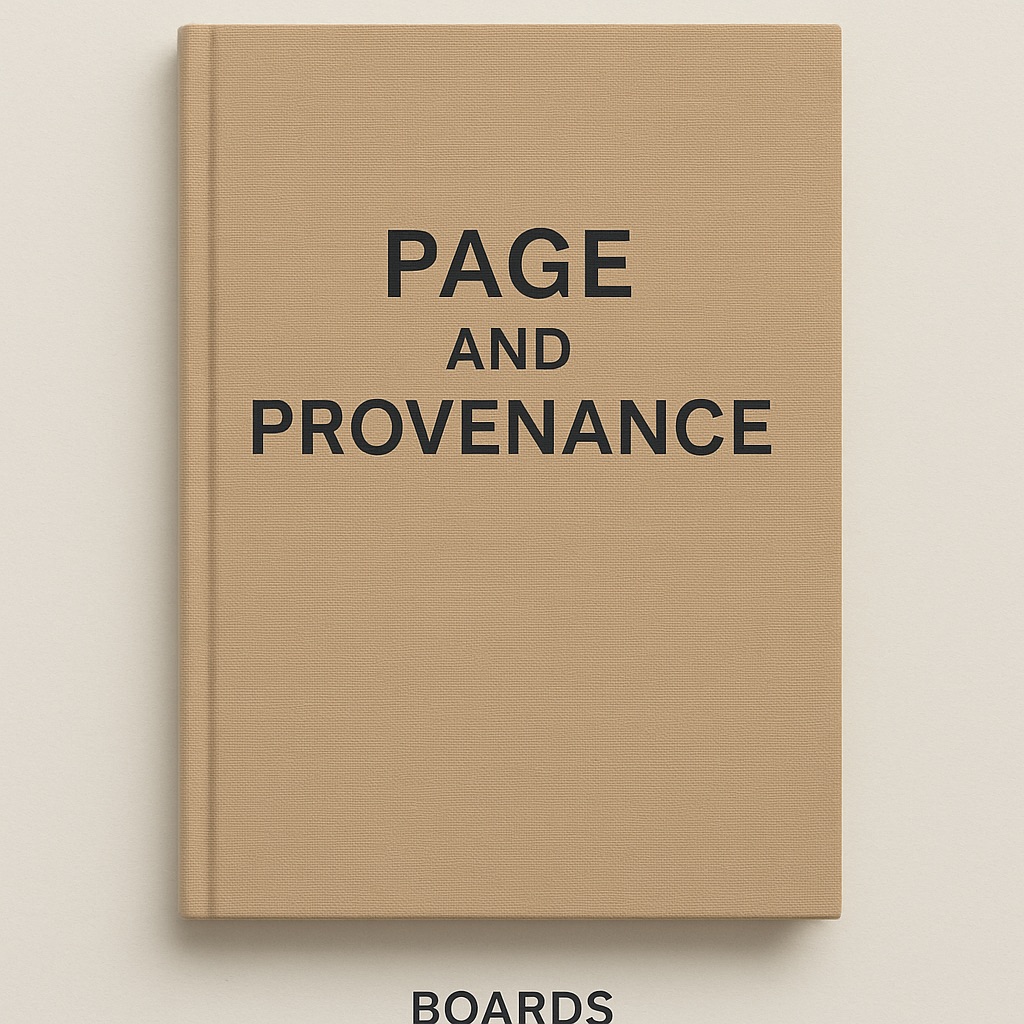
The stiff front and back covers of a hardcover book, typically made of cardboard covered with cloth, paper, or leather. The boards protect the text block and provide structural integrity.
What to Check:
- Corner wear: Bumping or rubbing at the corners (very common)
- Edge wear: Fraying or rubbing along board edges
- Bowing or warping: Boards that no longer sit flat
- Staining: Water damage, sun exposure, or other discoloration
- Blind stamps: Impressed marks (common on book club editions)
- Gilt/lettering: Condition of gold or colored lettering on spine/boards
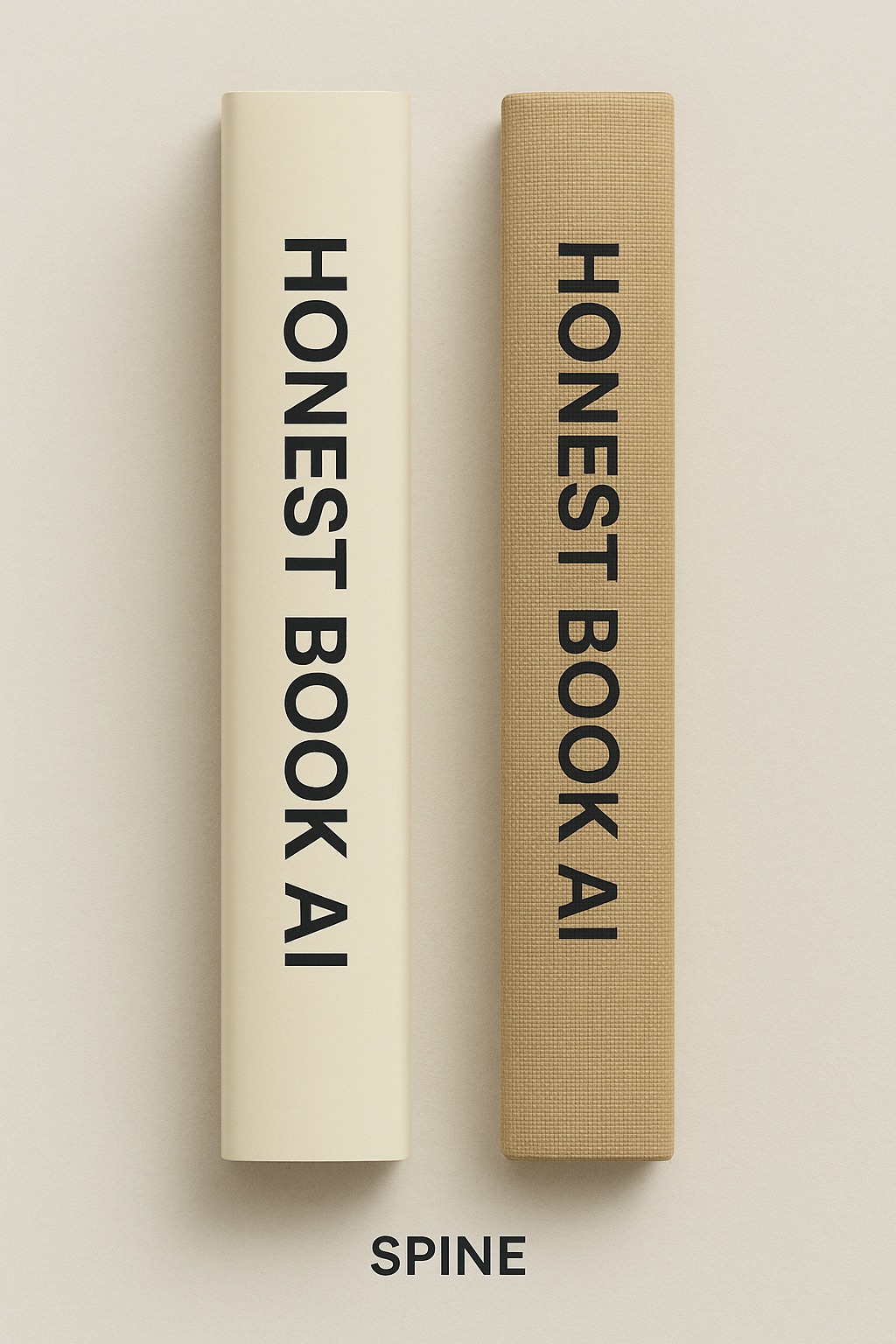
The backbone of the book that connects the front and back boards. Usually displays the title, author, and publisher. The spine is critical for shelf appeal and structural soundness.
What to Check:
- Lean (cocking): Book tilts when stood upright—indicates stress or poor storage
- Head/tail fraying: Wear at top and bottom of spine
- Sunning: Color fading from light exposure
- Creasing: Horizontal lines from improper opening
- Lettering condition: Fading, rubbing, or loss of gilt/stamping
- Rolling: Spine rounds outward (common with reading)
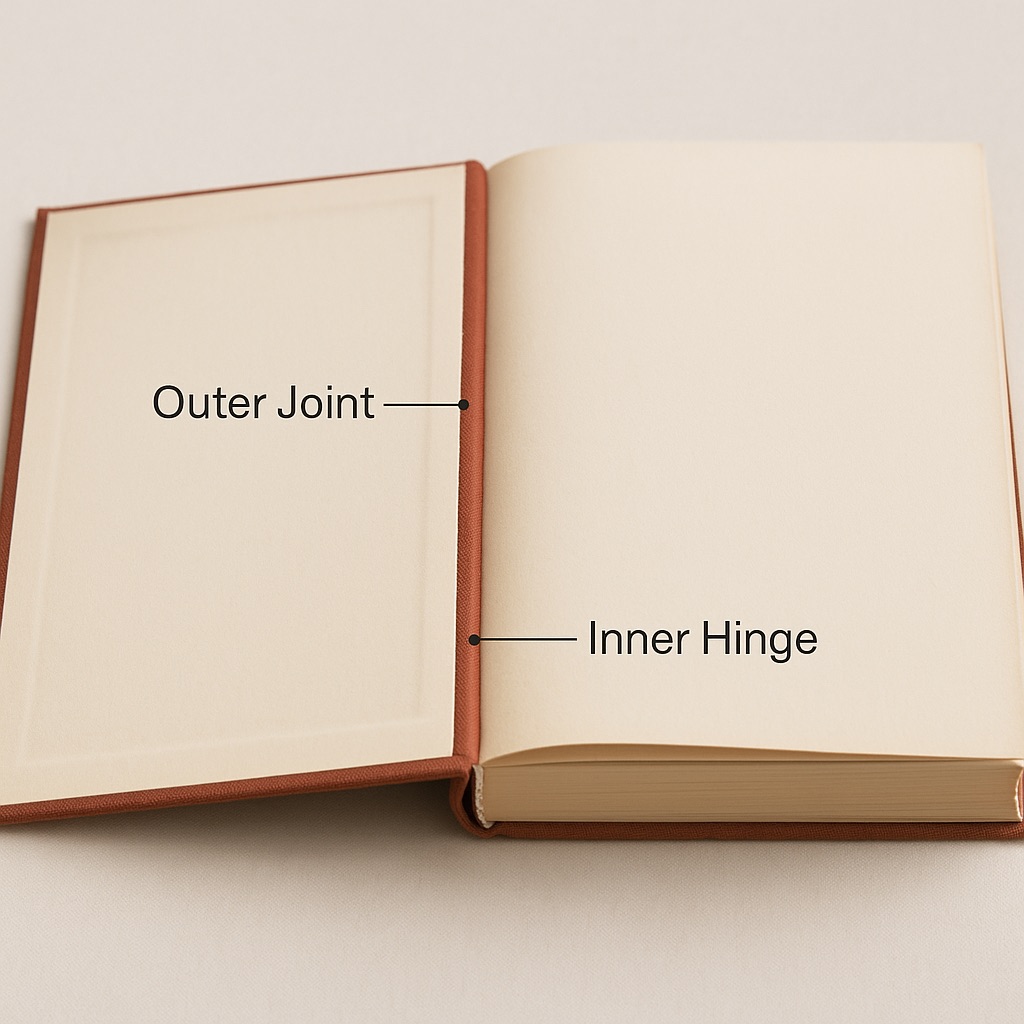
The hinges (inner joints where endpapers meet the text block) and joints (outer grooves where boards meet the spine) are critical stress points. Damage here significantly affects both condition grade and value.
What to Check:
- Inner hinges: Open the book gently—look for cracks or splitting at the gutter
- Starting hinges: Beginning separation (early stage of damage)
- Cracked/split hinges: Visible separation—pages may pull away from binding
- Outer joints: Check for separations between boards and spine
- Repairs: Look for tape, glue, or professional restoration
⚠️ Warning: Never force a book open. Hinges and joints weaken with age and improper handling.
The folded sheets glued to the inside of the front and back boards, connecting the text block to the cover. Endpapers can be plain, decorative, or printed with maps or illustrations.
What to Check:
- Inscriptions: Ownership signatures, gift messages, dates (can add or reduce value)
- Bookplates: Adhesive labels indicating previous ownership
- Foxing: Brown spotting from age/humidity (common on endpapers)
- Offsetting: Ink transfer from newspaper clippings or ephemera
- Staining: Water damage, adhesive residue, or other discoloration
- Previous owner marks: Names, stamps, library markings
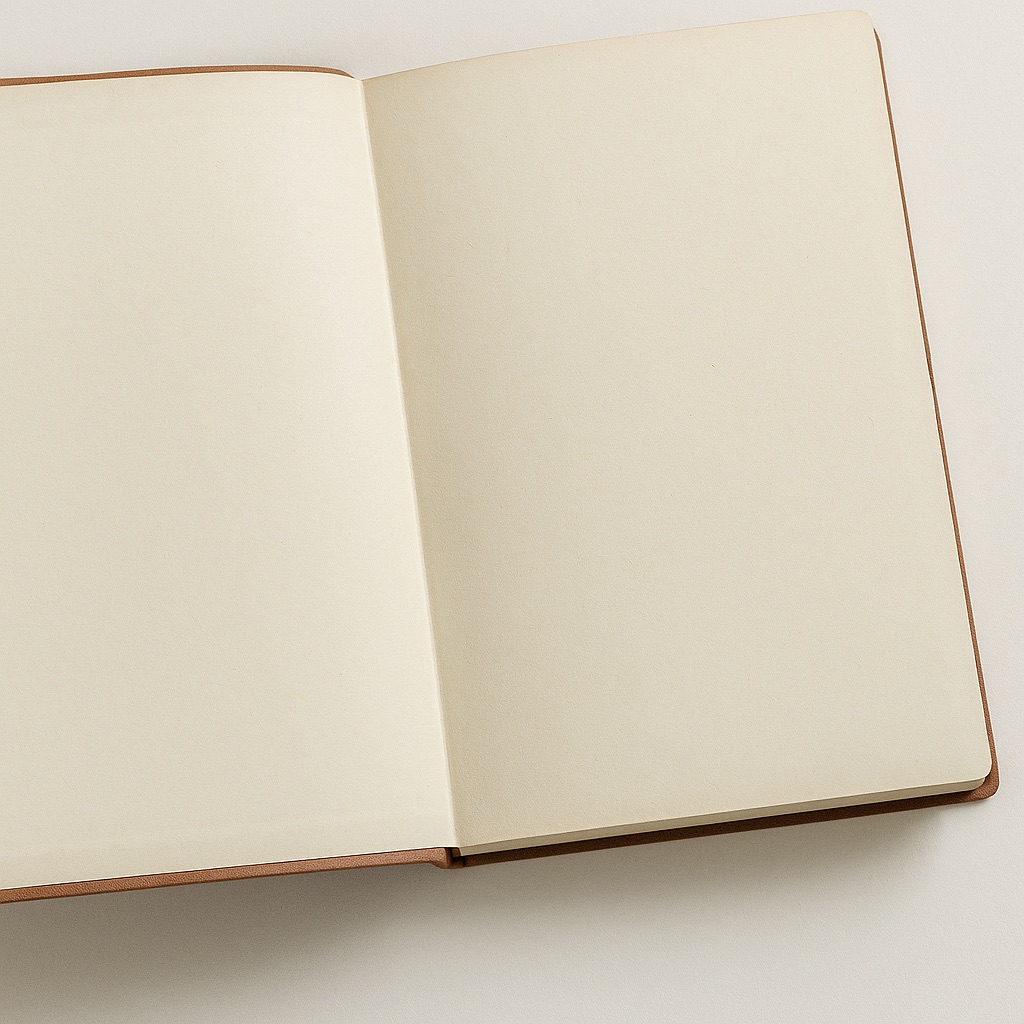
The sewn or glued assembly of pages that forms the book's interior. The text block is the heart of the book—it contains all the printed content and determines much of the book's structural integrity and collectible value.
Understanding the Text Block
The text block consists of all the pages bound together, including any preliminary pages (half-title, title page, copyright page), the main text, and any back matter (appendices, indices). In well-made books, pages are sewn in signatures (folded sheets) and then bound. Lower-quality books may be perfect-bound (glued) which is less durable.
What to Check:
- Page condition: Clean, crisp pages vs. foxed, toned, or brittle
- Fore-edge: Check the outer page edges for foxing, dust soiling, or damage
- Annotations: Underlining, marginal notes, highlighting (nearly always reduces value)
- Dog-ears: Folded page corners
- Plates/illustrations: Verify all plates, maps, or tissue guards are present
- Completeness: Ensure no pages are missing or torn out
- Binding integrity: Pages should be firmly attached; loose pages indicate binding failure
- Paper quality: Look for brittleness, especially in older books with acidic paper
Collector's Tip:
Even minor annotations can significantly reduce a book's value to serious collectors — how much varies substantially by title, edition, scarcity, and demand. Books used as reading copies are rarely collectible unless extremely rare.
Book sizes are traditionally described using terms that originated in the printing process, referring to how many times a full sheet of paper was folded to create the pages. Understanding these terms is essential for accurate cataloging and description.
Traditional Size Classifications
Folio
Size: Over 12 inches (30 cm) tall — very large
How made: Sheet folded once, creating 2 leaves (4 pages)
Common uses: Art books, atlases, fine press editions, historical volumes, coffee table books
Quarto (4to)
Size: 9-12 inches (23-30 cm) tall — large
How made: Sheet folded twice, creating 4 leaves (8 pages)
Common uses: Early printed books, art books, premium editions, scholarly works
Octavo (8vo)
Size: 7-9 inches (18-23 cm) tall — standard novel size
How made: Sheet folded three times, creating 8 leaves (16 pages)
Common uses: Most modern fiction and non-fiction, standard hardcover size
Duodecimo (12mo)
Size: 5-7 inches (13-18 cm) tall — small
How made: Sheet folded to create 12 leaves (24 pages)
Common uses: Pocket editions, poetry, travel books, vintage paperbacks
Sextodecimo (16mo)
Size: Under 5 inches (13 cm) tall — very small
How made: Sheet folded to create 16 leaves (32 pages)
Common uses: Miniature books, pocket Bibles, prayer books
Modern Simplification:
Today, most books are simply measured in inches or centimeters (height × width). The traditional terms are still used in rare book catalogs and bibliographies but are less common in everyday collecting. When describing a book, it's best to provide both the traditional term (if applicable) and the actual measurements.
Measurement Guidelines:
- Height: Measure from top to bottom of the book's spine (not the dust jacket)
- Width: Measure from spine to fore-edge
- Depth: Measure the thickness of the text block (optional but useful)
- Round: Round to the nearest quarter inch or centimeter
Example Descriptions:
- • "Octavo (8vo), 8.5 × 5.5 inches"
- • "Quarto, 11 × 8.5 inches, 320 pages"
- • "Tall octavo (9.25 × 6 inches)"
- • "Folio, 13 × 10 inches, illustrated"
Edition Identification
Learn how to determine what edition and printing you have by reading publisher codes, number lines, and other identifying markers.
The number line (also called printer's key) is a series of digits on the copyright page that indicates the printing number. Understanding it is essential for identifying first printings.
Basic Rules
The lowest number present indicates the printing number.
Example: 10 9 8 7 6 5 4 3 2 1 = First Printing
Example: 10 9 8 7 6 5 4 3 2 = Second Printing (the "1" was removed)
Common Formats
- Ascending order:
1 2 3 4 5 6 7 8 9 10— Most common in modern books. Lowest number = printing. - Descending order:
10 9 8 7 6 5 4 3 2 1— Publisher removes from the right for each printing. - Even numbers only:
10 8 6 4 2or2 4 6 8 10— The lowest number is 2, so under the basic rule either order reads as a second printing. The order of the digits does not change the reading. If you believe a publisher used an even-only line for first printings, confirm it with publisher-specific references before relying on it. - Odd numbers only:
1 3 5 7 9— First printing with only odd numbers. Less common but used by some publishers. - Year + printing:
1 3 5 7 9 10 8 6 4 2 / 24 25 26 27— Top row is printing number, bottom row is year (2024). - Split format:
1 3 5 7 9 10 8 6 4 2— Spacing doesn't matter; lowest number still indicates printing.
Pro Tips:
- Some publishers use only odd or only even numbers, and a few use split or year-coded formats.
- A "1" present usually indicates first printing, but always confirm with the full publisher pattern.
- Number lines became common in the 1970s–80s; older books may not have them.
- Always check for "First Edition" or "First Printing" statements in addition to the number line.
Number-line caveat:
Odd-only and even-only number lines do exist, but they are relatively uncommon compared with standard ascending or descending formats. When a number line looks unusual, consult publisher-specific references or bibliographies rather than assuming a first printing from pattern alone.
Not all publishers use number lines. Many explicitly state the edition and printing on the copyright page.
Common Statements
| Statement | Meaning |
|---|---|
| "First Edition" | Usually indicates first printing of the first edition. Check for number line to confirm. |
| "First Printing" | Explicit confirmation of first printing. Most reliable statement. |
| "First Published [Year]" | Indicates original publication year, but may be a reprint. Check number line. |
| "Second Printing" | NOT a first printing. Usually less valuable unless scarce. |
| No statement | May be first printing if copyright date matches title page year and no reprinting indicated. |
Important:
The phrase "First Edition" may remain on later printings for some publishers. Always verify with the number line or an explicit "First Printing" statement, and treat publisher-specific patterns as trade conventions rather than universal rules.
Common Mistake:
Don't confuse "First Edition" with "First Printing."
A "First Edition" book can have multiple printings (first printing, second printing, third printing, etc.). Only the first printing of the first edition is typically valuable to collectors. A book marked "First Edition" with a number line showing "2 3 4 5" is actually a second printing of the first edition and is worth significantly less.
Some publishers use Roman numerals, letter codes, or symbols to indicate printings, especially in older books or special editions.
Roman Numeral Systems
- British publishers (pre-1970s): Often used Roman numerals for impressions:
First Impression,Second Impression, etc. - Limited editions: May use Roman numerals for edition numbering:
Edition I,Edition II - Colophon statements: Back-of-book statements in fine press editions often use Roman numerals
Publisher-Specific Codes
The examples below illustrate historical patterns observed for a few well-known publishers. They are examples to help you form a hypothesis, not universal or guaranteed rules — practices varied by era and sometimes by imprint, so confirm with the number line, an explicit printing statement, or a specialist bibliography before relying on them.
Random House
Typically shows a "First Edition" statement on the copyright page for a first printing; later printings have often removed this or added a "Second Printing" note. Treat as a starting clue, not a guarantee.
Penguin / Viking
Number line with year: 1 3 5 7 9 10 8 6 4 2 / 24 25 26. The bottom row has typically indicated print year, though exact formats have varied over time.
Scribner's
Has often used the letter "A" on the copyright page for a first printing, with later printings showing "B", "C", etc. — a pattern, not a guarantee.
Knopf
Typically shows "First Edition" (with or without the Borzoi colophon) for a first printing; later printings have often stated "Second Printing" explicitly. As with the others above, treat this as a starting clue rather than a guarantee.
Research Tip:
When in doubt, consult publisher-specific bibliographies or collector forums. Older houses often used proprietary printing systems, and those practices can vary sharply by era. Always check publisher-specific references for pre-1970 and early modern titles.
Many older books (pre-1970s) don't have number lines. Here's how to identify first printings without them:
Methods for Books Without Number Lines
1. Match Copyright Year to Title Page Year
If the copyright date matches the publication year on the title page, and there's no indication of reprinting, it's likely a first printing.
2. Look for "First Printing" Statements (and Read "First Published" Carefully)
An explicit printing statement such as "First printing [Month Year]" is strong evidence of a first printing. "First published in [Year]" is different: it records when the work was originally published and often remains on later printings, so on its own it does not confirm first-printing status. Combine it with the other methods here, such as the absence of any reprint statement and a matching title-page date.
3. Check for Multiple Copyright Dates
If you see multiple years (e.g., "© 1985, 1987, 1990"), it indicates reprints. The earliest year alone suggests first printing.
4. Research Publisher Points
"Points" are unique identifying features in first editions (typos, specific illustrations, binding cloth). Consult bibliographies for your specific book rather than relying on a single clue.
5. Examine Publisher's Address
Publisher addresses changed over time. The original address can help date a printing. Cross-reference with known publishing history.
Advanced Research:
For valuable books without clear edition indicators, consult specialized bibliographies like:
- BAL (Bibliography of American Literature)
- Connolly's Modern First Editions: Their Points
- Publisher-specific guides (e.g., Scribner's imprint history)
- Online databases like ABAA or ILAB
"Points" are specific identifying features that distinguish a true first printing or a particular issue state of a book. They may include typos, illustrations, binding details, jacket price states, or other publisher-specific markers.
Why points matter:
- Points are documented in bibliographies and specialist references.
- They are essential for verifying many classic and high-value books.
- Never assume a first printing based on a single clue if the title is known to have issue points.
Issue points are one of the main reasons edition identification is title-specific. For serious collecting, the correct comparison point is the exact publisher and issue history of the book in hand.
Book Club Editions (BCE) are reprints sold through clubs like Book-of-the-Month Club or Literary Guild. They are usually worth substantially less than trade first editions of the same title, though exactly how much less varies widely by title, edition, rarity, and demand.
How to Spot a Book Club Edition
No Price on Dust Jacket
Book club editions rarely have a printed price on the front flap. Trade editions almost always do.
Blind Stamp on Back Board
Small impressed mark (often a circle, square, or dot) on the lower right corner of the back board. This can be a useful or strong clue for some book-club editions and publisher/era combinations, but it should be weighed together with jacket/flap evidence, publisher statements, gutter codes, physical specifications, and other edition evidence — no single clue is universally conclusive.
Statement on Copyright Page
May say "Book Club Edition," "BOMC," or "Quality Paperback Book Club."
Different Physical Specifications
Book club editions often use cheaper materials: thinner paper, lighter boards, different binding cloth, or smaller dimensions.
No ISBN or Different ISBN
May lack an ISBN entirely, or have a different ISBN than the trade edition.
Weight Difference
BCE copies often feel noticeably lighter than trade editions due to thinner paper and lighter boards. Weigh the book if you have access to a known trade edition for comparison.
Gutter Margins
Book club editions sometimes have narrower inner margins (gutter) to save paper, making text appear closer to the spine binding.
Missing Back Matter
Some BCE copies omit publisher advertisements, author bios, or "other books" pages found in trade editions to reduce page count.
Gutter Codes
For many mid-20th-century book club editions, especially Doubleday and BOMC, a small alphanumeric code printed in the inner margin (gutter) of one of the last text pages is a strong indicator of a BCE, though it should be weighed alongside the other clues here rather than treated alone as conclusive. Look near the binding on the last few pages for a short code printed close to the spine.
Value Impact:
Even a BCE in pristine condition is typically worth only a fraction of a comparable trade first edition. The exact gap varies significantly by title, edition, rarity, and current market demand.
A price-clipped dust jacket has had its price corner removed—usually cut off with scissors. This is considered a defect that reduces the jacket's completeness and may also remove an important clue used to distinguish first printings from book club or export copies.
Why Prices Were Clipped
- Gift giving: Purchasers removed the price before gifting the book
- Bookstore remainders: Stores marked down books and clipped the original higher price
- Export editions: Some international editions had prices removed for variable pricing by region
- Review copies: Publishers sometimes clipped prices on advance review copies
How to Identify Price Clipping
Look at the front flap (inside the front dust jacket). The upper or lower corner may be:
- Cut with scissors (straight or jagged edge)
- Torn roughly
- Missing entirely
Value Impact:
Price-clipped jackets are considered incomplete and typically reduce value to some degree; how much depends heavily on the book's rarity, desirability, edition, and current market demand.
Exception:
Some export editions or special printings were issued without prices. If a jacket was never meant to have a price, it's not considered "clipped." Research the specific edition to confirm.
An ex-library (or ex-lib) book is one that was previously owned and circulated by a library. These books typically have significant markings and modifications that strongly reduce their collectible value compared to a private-owner copy in the same condition. The precise impact depends on title, rarity, and how extensively the copy was altered.
How to Identify Ex-Library Books
Stamps and Markings
Library name stamp on edges (fore-edge, top, bottom), inside covers, or on specific pages. Often stamped in ink or embossed.
Call Number Labels
Dewey Decimal or Library of Congress call number stickers on the spine or inside covers. Usually white or colored adhesive labels.
Date Due Slips and Card Pockets
Pockets glued inside front or back covers for checkout cards, or date due slips pasted on endpapers.
Reinforced Bindings
Libraries often reinforce spines with tape or rebind books entirely in sturdy library buckram (usually plain colored cloth). Original dust jackets may be discarded or covered in plastic.
Barcode Stickers
Modern libraries use barcode labels on back covers or inside pages for electronic checkout systems.
Mylar or Plastic Jacket Covers
Libraries often cover dust jackets in clear plastic protective sleeves, which can damage or fade the jacket over time.
"Withdrawn" or "Discard" Stamps
When libraries sell off books, they often stamp "WITHDRAWN," "DISCARD," or similar markings to indicate the book is no longer library property.
⚠️ Value Impact:
Ex-library copies are almost always worth significantly less than private-owner copies. This is a general guideline; actual value varies significantly by title, edition, rarity, and current market demand.
Why collectors avoid them:
- Permanent markings and stamps deface the book
- Original binding often replaced or heavily modified
- Dust jackets frequently missing or damaged
- Heavy circulation wear beyond typical aging
- Adhesive from labels can cause long-term damage
Rare Exceptions:
In extremely rare cases, an ex-library copy may be acceptable to collectors if it's the only known surviving copy of an important book, or if the library provenance itself is historically significant (e.g., a book from Thomas Jefferson's personal library, even if later donated to a public library).
Common Mistake:
Don't confuse ex-library books with books that have a bookplate, inscription, or remainder mark from a private owner or publisher. Those are different conditions, and while they can affect value, they are usually far less damaging than institutional library markings. Private inscriptions can even increase value if from a notable person.
Ex-Libris warning
Do not confuse "Ex-Library" with "Ex-Libris." "Ex-Libris" is Latin for "from the library of" and usually appears on private ownership bookplates. A generic Ex-Libris bookplate is far less damaging than library markings. A bookplate is evidence of ownership: if it belonged to a notable person, the copy has notable provenance, and it is an association copy only if that owner had a real connection to the author or the work. Until the bookplate and the owner's identity are verified, treat the attribution as unverified.
A remainder mark is a publisher or bookseller mark showing that unsold copies were discounted or remaindered. Common forms include dots, lines, or stamps on the bottom or fore-edge of the text block.
Remainder marks usually lower collectible appeal, but they are different from library ownership marks. A remaindered copy can still be desirable if the title is rare or the condition is otherwise exceptional.
Signatures and inscriptions can have a major impact on collectibility and value. In professional description, they should be identified carefully and not conflated with ownership markings or decorative bookplates.
Flat signature
The author signs directly on a native page of the bound book, usually the title page, half-title, or a front free endpaper. This is generally the most desirable form for collectors.
Tipped-in signature/page
A separately signed page or sheet that the publisher later binds or glues into the book. This is common in modern signed editions and is slightly less desirable than a true flat signature.
Laid-in
A signed card, letter, or bookplate that is loose inside the book but not attached to the binding. Collectibility depends heavily on what the document is.
Inscriptions and association copies
An inscription is a signature plus a message to a named person. Placement matters; the title page and half-title are the most common and preferred locations.
An association copy is a copy with a documented connection to the author or the work: one owned or annotated by the author, owned by someone connected with the author (such as another author, editor, or friend), or owned by someone associated with the book's contents. An inscription can establish that connection, but so can ownership or annotation. An inscription to someone with no such connection does not make an association copy.
A famous previous owner without that connection is notable provenance, not an association copy. Ownership evidence (a bookplate, signature, or library stamp) shows who owned the book; it does not establish the association by itself, and an unverified attribution should be described as such. Standard references: Carter & Barker, ABC for Book Collectors, and the RBMS Provenance Evidence thesaurus.
- Authentic signatures should be supported by context, provenance, or comparison to known examples.
- Bookplates and ownership markings are not the same as author signatures.
- Some inscriptions reduce value to pure collectors, while association copies can be significantly more desirable.
Authenticity and risk
Signature authenticity is its own discipline. Secretarial signatures, autopen, and outright forgeries exist, especially for famous authors. Visual comparison is a starting point, not proof. For high-value items, serious collectors often rely on documented provenance or third-party authentication; any explicit claim that a signature is "author-signed" should be made with care and evidentiary backing.
Modern collecting increasingly includes pre-publication copies. ARCs are advance reading copies, often distributed before publication and usually marked "Not for sale." Uncorrected proofs are early printed versions used for review and proofreading.
These are not finished first editions, but they can be collectible in their own right, especially for important debuts or scarce authors. Describe them honestly as ARCs or proofs rather than as finished firsts.
Many ARCs use what appears to be the final cover art, but in a simpler matte printing, while the finished trade edition may add embossing, foil stamping, or spot-gloss. When browsing thrift or secondhand shops, that difference in finish can be a quick way to spot ARCs mixed in with regular stock.
Paperback collecting follows related but distinct standards. Softcover books may be first printings, later printings, or simultaneous issue copies depending on the publisher, and the usual hardcover jacket logic does not always apply.
- Look for edition statements, printing history, and publisher-specific issue points rather than assuming hardcover conventions.
- Condition still matters, but creasing and spine handling are weighed differently than on jackets.
- Some paperback originals are the preferred collectible state, so market context is essential.
Condition Terms
Recently Viewed
Terms you open will show up here for quick return.
Book Evaluation Checklist
- 1Confirm edition on title/copyright pages (number line or statement).
- 2Inspect dust jacket and flaps for price, codes, chips, sunning.
- 3Assess boards, spine, and hinges for rubbing or splits.
- 4Verify pagination and plates; ensure completeness.
- 5Note provenance (bookplates, inscriptions, auction stickers).
- 6Evaluate signatures; document placement and authenticity evidence.
- 7Research points and colophon for variant states.
- 8Photograph all critical angles with neutral light.
- 9Write an honest condition note using standard terms.
- 10Attach supporting documentation (certificates, catalog references).
Documenting a book: required, conditional, and additional photos
To submit a book for evaluation on HonestBookAI, a base set of photos is required: front cover, spine, title page, copyright page, and rear cover (the copyright-page photo is replaced with alternative dating evidence if the book has no visible copyright page or date).
Some photos are required only when they apply: dust-jacket photos with the jacket both on and off the book if the book has one, a signature photo if it's signed, and an inscription photo if it's inscribed.
Beyond that, photos of damage, endpapers, binding, or the table of contents can improve confidence but aren't required to submit. For your own records — insurance, provenance, or a personal archive — it's worth documenting more broadly, including any blind stamps or gutter codes on the rear board. The exact current requirements for evaluation on HonestBookAI are shown in the submission flow itself, since they can change as the product evolves; this page describes the general approach rather than a substitute for what's shown there.
Ready to value a book?
You now have the grading language, edition signals, and condition framework. Put it to work with a valuation from HonestBookAI — edition-aware, condition-graded, and grounded in researched market evidence.
Run a valuation →